
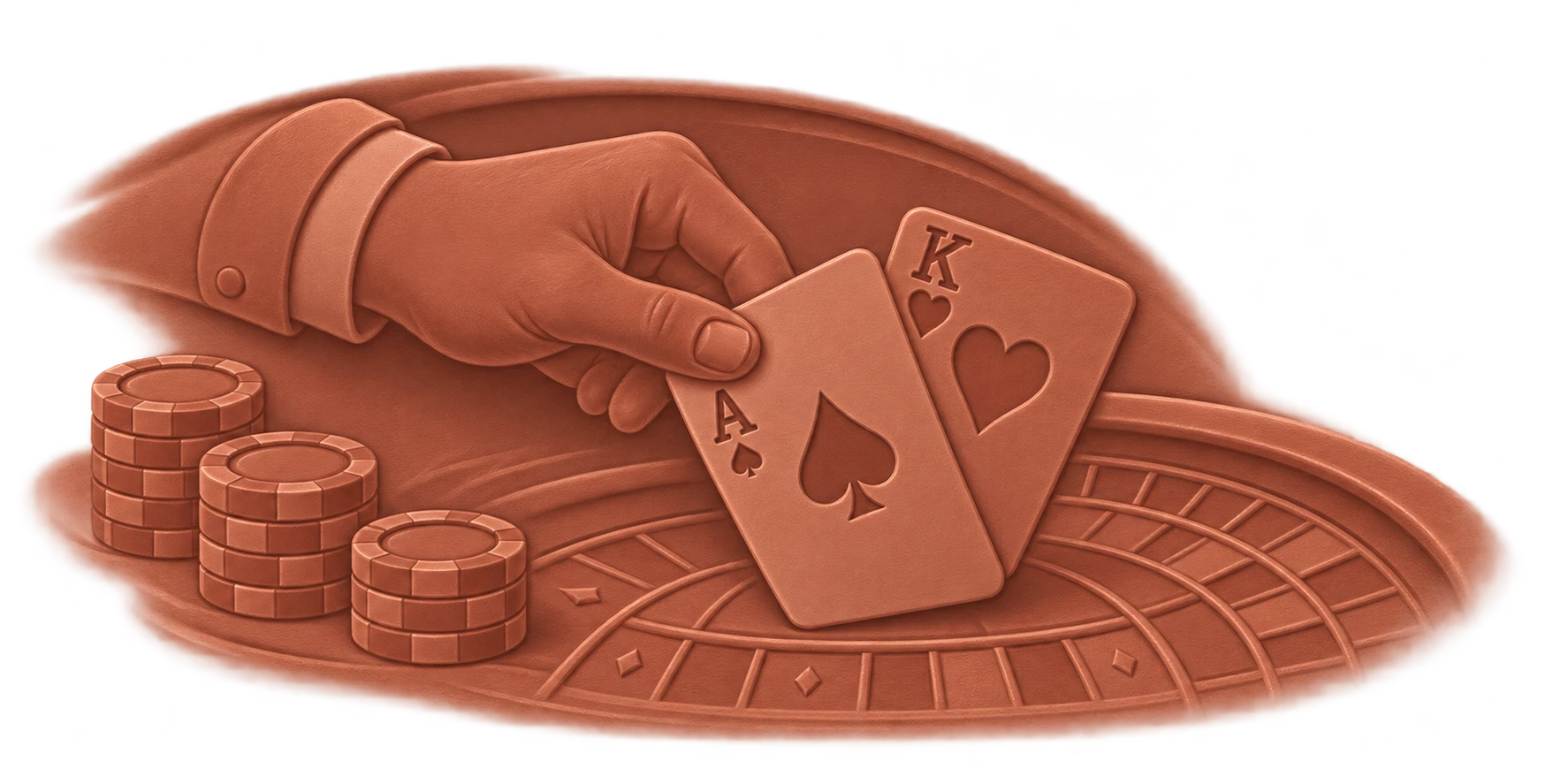
Game reference
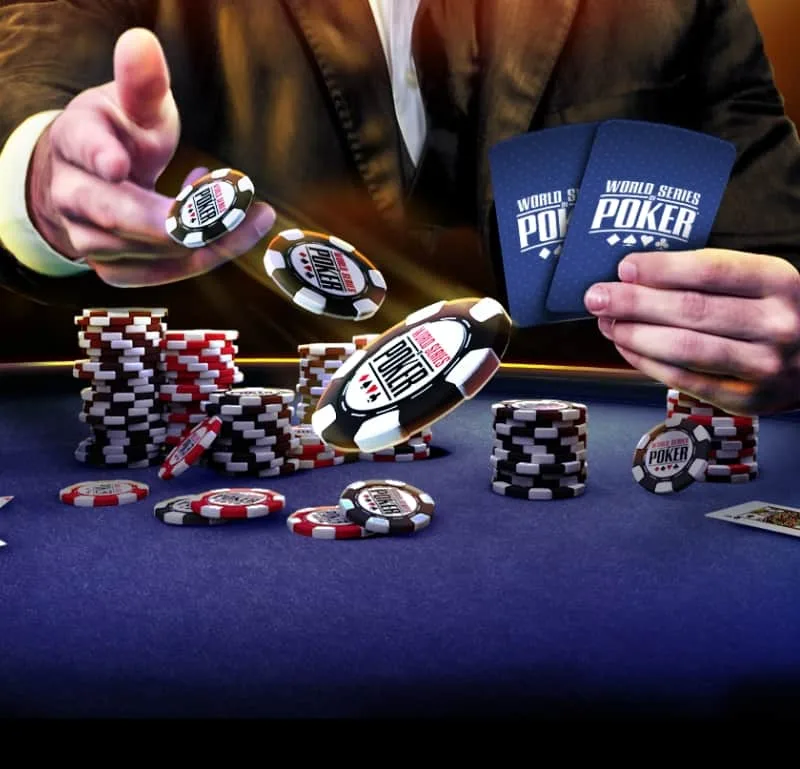
Texas Hold’em
A social-poker reference from PlayWSOP using virtual chips, for ages 21 and over.
Source: Original game catalogue.
This reference does not establish availability, game configuration or payout terms for another service.
Return to the game collection →Cards and a wheel create different kinds of anticipation. A card table reveals a hand piece by piece; a roulette wheel turns around a single moving ball. The Tsars source description names live casino as well as Teen Patti, Andar Bahar and Rummy, bringing several recognisable formats into one account of casino entertainment.
This independent publication uses named catalogue references to illustrate game identities. Its account panel is a preview; it does not connect readers to real-money play or process payments. Availability of a referenced game through another service is not established by its appearance here.
Teen Patti and the three-card hand
Teen Patti has a compact visual signature: a small hand of cards and the possibility of comparison. Pagat’s account of the traditional game describes three-card hands and their ranking. The familiar pack supplies the materials, while the short hand keeps attention on a limited set of cards.
The name 100 Teen Patti appears in the original game catalogue used on this site. Its artwork uses bold gold and card motifs, giving the reference a clear identity of its own. The illustration represents the named catalogue entry; it is not a promise that this particular version is available through Tsars.
Card games can share a table and a pack without sharing the same structure. Teen Patti, blackjack and Rummy each give a collection of cards a different role. Their visual resemblance is part of their appeal, while their individual rules distinguish the experiences.
Andar Bahar and a matching rank
Andar Bahar places a central card at the heart of a simple visual arrangement. In the traditional form described by Pagat, cards are dealt to two sides until a card matches the central rank. The movement across the table is easy to recognise even before the details of a particular version are considered.
The original Andar Bahar cover shown in the collection uses a fan of aces and a cluster of chips. It sits beside the Teen Patti reference but has a different visual emphasis: two sides and a matching event rather than the composition of a three-card hand. A named version’s own rules give its precise details.
Rummy and the language of combinations
Rummy brings another idea to the card table: the arrangement of cards into meaningful combinations. Instead of focusing on the same sequence as Andar Bahar, its family of games gives attention to relationships between cards. That emphasis produces a different pace and a different kind of visual interest.
The source description names Rummy, but does not identify a particular version or supply a Rummy cover among the nine original catalogue images. It is presented here as a named format, without assigning it a game image or details that the source does not provide.
Blackjack and a shared table
Blackjack’s visual centre is the hand in front of the player and the dealer’s hand across the table. Pagat describes the familiar aim of a hand approaching 21 without going over. Different table versions can have their own rules, so the name is a starting point rather than a complete description.
In a live presentation, a dealer and table may be visible during a round. That shared view gives cards a human rhythm: a hand is dealt, revealed and compared. A promotional image alone cannot establish the stream, table rules or current availability of an individual service.
A wheel in motion
Roulette shifts attention away from a hand of cards and toward a wheel. The spin has a single visible centre of motion, followed by the ball coming to rest. The D Roulette catalogue cover places that wheel and a dealer at the centre of its image, contrasting with the card-led pictures around it.
The wheel, its layout and the table’s own rules define a particular version. Previous results do not guarantee the next one. The image is included as a source-catalogue reference, and the presence of an illustration does not establish a connected table on this site.
Different rhythms, one collection
The source description also mentions slots and mobile play. A reel display, a shared card table and a wheel put the focus in different places; a small screen changes the available space for that presentation without changing the need to understand the named game’s rules.
The distinction is useful even when the objects look familiar. Teen Patti centres a three-card hand, Andar Bahar follows a matching rank, and roulette has its turning wheel. Together they show the range behind a few short game names. Gambling involves a risk of loss, and adults should consider the applicable terms.
Even within a single category, presentation can change the mood. An illustrated cover holds a moment still; a live-table description suggests an unfolding sequence. The reference artwork for Texas Hold’em comes from PlayWSOP, a social-poker source using virtual chips and intended for people aged 21 and over. Its identity and age condition are distinct from the Tsars source description.
Names, pictures and context work together. A cover can introduce the subject quickly, while a source gives it a more precise identity. That is why the collection keeps the original titles and attributions beside the images.